
Revolutionizing Laboratory Workflows with Precision & Embedded Intelligence
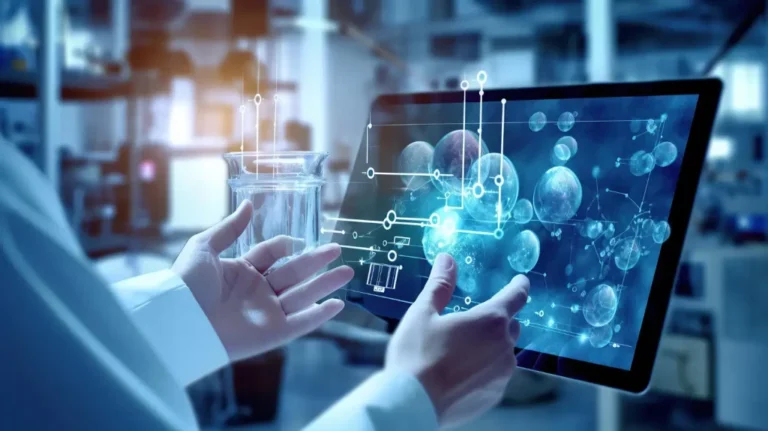
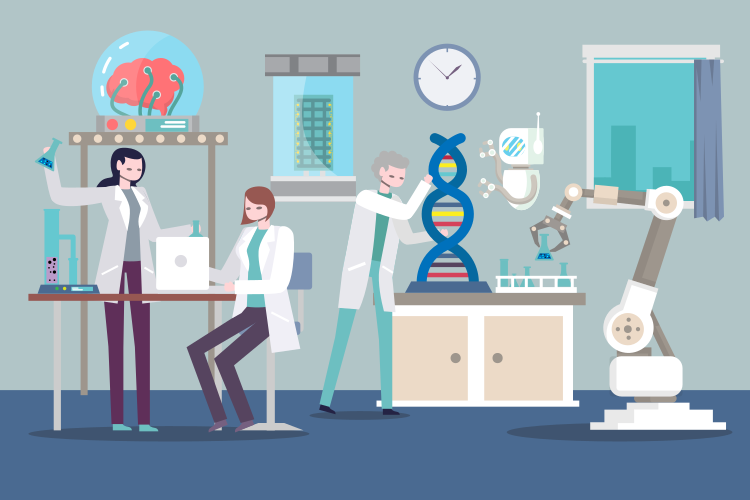
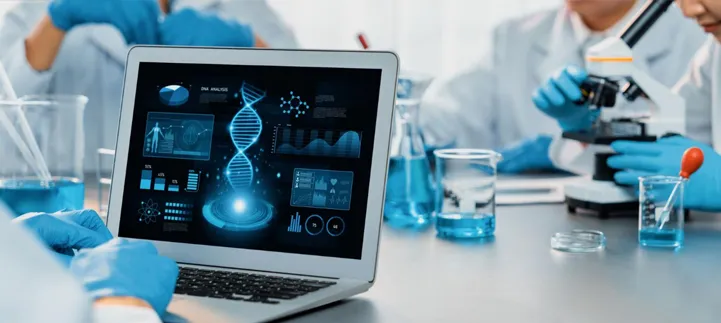
Lab Automation refers to the use of technology to perform laboratory tasks and processes with minimal human intervention. Lab Automation involves using technology, robotics, and software to automate various laboratory tasks, such as sample preparation, data analysis, and experiment execution. It enhances efficiency, reduces human error, and accelerates research and development in fields like biotechnology, pharmaceuticals, clinical diagnostics, and synthetic biology.
Lab Automation
Behind the Scenes of a Smart Lab: The Role of Firmware in Modern Laboratory Automation
Laboratory Device Automation
Laboratory Device Automation is a key aspect of Lab Automation, which refers to the integration of instruments, software, and workflows in a laboratory to perform tasks with minimal human intervention. The automation of laboratory devices enhances the precision, reproducibility, and efficiency of experiments and processes. This technology is widely used across various sectors, including life sciences, pharmaceuticals, chemistry, and synthetic biology, among others.
Lab Software Algorithms & Methodologies
Lab automation is the use of technology to streamline and optimize laboratory workflows, increasing throughput, accuracy, and efficiency. Lab automation software often includes algorithms and methodologies designed to automate processes, manage data, and enhance the precision of experiments and analyses. These algorithms and methodologies are essential components in handling the complexities of lab operations, from managing robotic systems to analyzing experimental data.
Automated Clinical Analysis & Diagonosis
Automated Clinical Analysis and Diagnosis Services in lab automation refer to the use of technology, robotics, and software systems to streamline and enhance the process of conducting clinical tests, analyzing results, and diagnosing patients. These services aim to improve the efficiency, accuracy, and speed of laboratory operations, reducing human intervention and error, while enabling high-throughput analysis.
Solutions Expertise Into..
Liquid Handling
Liquid Handling Services in lab automation refer to the automated processes and systems used for dispensing, mixing, transferring, and managing liquids in a laboratory setting.

Digital Image Processing
Digital Image Processing (DIP) in lab automation involves the use of computer algorithms and techniques to enhance, analyze, and interpret images captured by laboratory instruments.

Radiometry
Radiometry services involve the precise measurement of radiation and radioactive materials for applications in medical diagnostics, drug development..
Instrument Adapters
Instrument adapters are essential components in lab automation systems, allowing seamless integration of laboratory instruments with laboratory information management systems (LIMS), automation platforms, or other software systems.

Firmware Development
Firmware Development services in the context of Lab Automation refer to the creation and maintenance of softwares that is crucial for the operation of hardware devices used.

Clinical Diagnostics
Clinical diagnostics services refer to the processes and procedures used to analyze biological samples (such as blood, urine, or tissue) to detect, diagnose, or monitor diseases and medical conditions.

High-throughput Screening
High-throughput screening (HTS) is a method used in laboratory automation to rapidly conduct millions of chemical, genetic, or pharmacological tests.

Development of Assays
Lab Automation refers to the use of technology to perform laboratory tasks with minimal human intervention. This can significantly enhance efficiency..

Genotyping
Genotyping Services under Lab Automation involve the use of automated technologies and systems to perform genetic analysis and determine genetic variations in an individual’s DNA.

Microarrays
Microarrays are a high-throughput technology used to measure the expression levels of thousands of genes simultaneously or to analyze genomic variations.

Proteome Analysis
Proteome Analysis services refer to the use of automated systems and technologies to analyze and characterize the complete set of proteins in a biological sample.
Domains we serve
Lab Automation
Lab Automation refers to the use of technology to perform laboratory tasks and processes with minimal human intervention.
Cheminformatics
We have worked in ChemInformatics niche providing services in data mining and analysis, chemical structure representation..
Synthetic Biology
Synthetic Biology involves the design and construction of new biological parts, devices, and systems, as well as the re-design of existing natural biological systems..
Synthetic Biology
Synthetic Biology involves the design and construction of new biological parts, devices, and systems, as well as the re-design of existing natural biological systems..
Electronic Device Designing
Electronic device designing refers to the process of creating and developing electronic systems or products that serve specific functions..
Health Analytics
Health Analytics in Healthcare involves the use of data analysis tools and techniques to improve patient care, optimize operations..
Synthetic Biology
Synthetic Biology involves the design and construction of new biological parts, devices, and systems, as well as the re-design of existing natural biological systems..
Synthetic Biology
Synthetic Biology involves the design and construction of new biological parts, devices, and systems, as well as the re-design of existing natural biological systems..
FAQ
Frequently Asked Questions
UVJ Technologies provides end-to-end lab automation software solutions across three core pillars: Laboratory Device Automation, Lab Software Algorithms & Methodologies, and Automated Clinical Analysis & Diagnosis. Our solution expertise spans Liquid Handling, Digital Image Processing, Microfluidics, Radiometry, Instrument Adapters, Firmware Development, Clinical Diagnostics, High-Throughput Screening (HTS), Development of Assays, Genotyping, Microarrays, and Proteome Analysis.
Our lab automation software is built for seamless, bidirectional integration with Laboratory Information Management Systems (LIMS) and Electronic Lab Notebooks (ELNs). This enables automated sample tracking, real-time data exchange, result validation, workflow scheduling, and full audit trail compliance — connecting your instruments, data, and processes into a single, unified lab ecosystem.
High-throughput screening (HTS) is a method to rapidly test millions of chemical, genetic, or pharmacological compounds to identify drug candidates or active substances. Lab automation enables HTS by using robotic liquid handlers, automated plate readers, and intelligent software to conduct these screenings at scale — delivering 10x faster candidate prioritization with greater consistency and significantly reduced human error.
AI and machine learning are transforming lab automation by enabling predictive analytics, intelligent workflow optimization, anomaly detection, and adaptive experiment planning. In 2026, "intelligent automation" — combining AI, digital twins, and robotics — is recognized as the biggest productivity driver in pharma and research labs. UVJ integrates AI-driven optimization into liquid handling, digital image processing, clinical diagnostics, and genotyping workflows to help labs move from reactive to predictive operations.
Firmware is the low-level software embedded in laboratory instruments — robotic arms, pipetting systems, centrifuges, sensors — that controls hardware operations in real time. In lab automation, firmware bridges the gap between hardware and higher-level software platforms like LIMS and SCADA. UVJ develops custom firmware for precision control, OTA (over-the-air) updates, safety compliance (FDA 21 CFR Part 11, HIPAA), and seamless integration with cloud and IoT platforms.
Digital Image Processing (DIP) uses computer algorithms to enhance, analyze, and interpret images from laboratory instruments such as microscopes, plate readers, and spectrophotometers. In healthcare, it automates histopathology analysis and cellular classification. In pharma, it enables high-throughput compound screening and cell morphology analysis. UVJ's DIP capabilities include AI-powered object detection, deep learning segmentation, 3D visualization, LIMS integration, and automated quality control reporting.
Related Blogs