
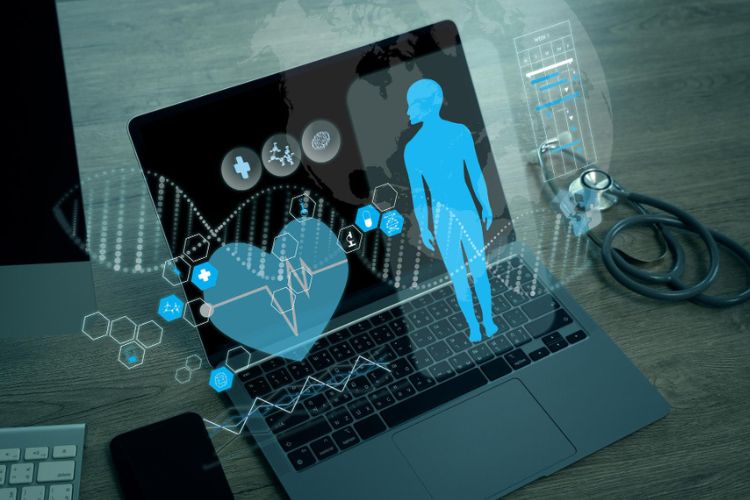



Turning Data into Better Care, Smarter Decisions & Stronger Outcomes
Health Analytics in Healthcare involves the use of data analysis tools and techniques to improve patient care, optimize operations, and drive innovation in medical research. It leverages large datasets from electronic health records (EHRs), wearable devices, clinical trials, and other health sources to extract actionable insights. Health analytics is revolutionizing healthcare by transforming data into actionable insights, improving patient care, operational efficiency, and overall health outcomes.
Lab Automation
Behind the Scenes of a Smart Lab: The Role of Firmware in Modern Laboratory Automation
Health Analytics
Health Analytics in Healthcare involves the use of data analysis tools and techniques to improve patient care, optimize operations, and drive innovation in medical research. It leverages large datasets from electronic health records (EHRs), wearable devices, clinical trials, and other health sources to extract actionable insights. Health analytics is revolutionizing healthcare by transforming data into actionable insights, improving patient care, operational efficiency, and overall health outcomes.
Medical Data Handling
Medical Data Handling in Healthcare refers to the processes and practices used to collect, store, manage, and protect patient data in a healthcare setting. Due to the sensitive nature of healthcare data, efficient handling is essential for patient care, research, and compliance with regulations. Efficient and secure medical data handling is crucial for improving patient care, driving medical research, and ensuring compliance with regulatory standards in the healthcare industry.
Patient Centered Services
Patient-Centered Services in healthcare focus on delivering care that is respectful of, and responsive to, individual patient preferences, needs, and values. These services ensure that patient values guide all clinical decisions, ultimately enhancing the overall experience and outcomes. By focusing on patient-centered services, healthcare providers can improve patient satisfaction, increase treatment adherence, and achieve better health outcomes while fostering a more compassionate and responsive healthcare system.
Solutions Expertise Into..
Health Administrative Systems
These systems are essential for maintaining compliance with health regulations, ensuring the well-being of patients and staff, and managing health services offered by the establishment.

Enterprise Content Management
ECM plays a vital role in streamlining operations, improving customer experience, and ensuring compliance with regulatory standards.

Patient Records Management
Patient Records Management in the context of healthcare involves the systematic handling of patients' medical data, histories, and treatment information.

Medical imaging services
Medical imaging services in healthcare involve the use of various technologies to create visual representations of the interior of a body for clinical analysis and medical intervention.

Patient Care Solutions
Patient Care Solutions in healthcare refer to a range of technologies, systems, and services designed to improve the quality of care provided to patients.

AI Healthcare Solutions
AI healthcare solutions and chatbots are transforming the way healthcare is delivered and managed, offering a range of benefits for both patients and healthcare providers.

Mobile App Solutions
Mobile app solutions in healthcare offer a range of functionalities designed to enhance patient care, streamline administrative processes, and improve overall health outcomes.

Domains we serve
Lab Automation
Lab Automation refers to the use of technology to perform laboratory tasks and processes with minimal human intervention.
Cheminformatics
We have worked in ChemInformatics niche providing services in data mining and analysis, chemical structure representation..
Synthetic Biology
Synthetic Biology involves the design and construction of new biological parts, devices, and systems, as well as the re-design of existing natural biological systems..
Synthetic Biology
Synthetic Biology involves the design and construction of new biological parts, devices, and systems, as well as the re-design of existing natural biological systems..
Electronic Device Designing
Electronic device designing refers to the process of creating and developing electronic systems or products that serve specific functions..
Health Analytics
Health Analytics in Healthcare involves the use of data analysis tools and techniques to improve patient care, optimize operations..
Synthetic Biology
Synthetic Biology involves the design and construction of new biological parts, devices, and systems, as well as the re-design of existing natural biological systems..
Synthetic Biology
Synthetic Biology involves the design and construction of new biological parts, devices, and systems, as well as the re-design of existing natural biological systems..
FAQ
Frequently Asked Questions
A Health Administrative System (HAS) is the software backbone that manages the non-clinical operations of a healthcare organization — scheduling, billing, compliance, workforce management, and supply chain. UVJ develops custom HAS software covering automated patient scheduling and appointment management; EHR integration for centralized patient data access; billing and revenue cycle management with automated claims processing; telemedicine and virtual care management platforms; patient self-service portals; workforce scheduling and performance tracking; regulatory compliance and reporting automation (HIPAA, ICD-10); real-time inventory and supply chain tracking for medical supplies; and data security with role-based access control and end-to-end encryption. These systems are built to reduce administrative overhead, eliminate billing errors, and improve the financial and operational performance of hospitals, clinics, and healthcare organizations.
Medical imaging software is at the diagnostic heart of modern healthcare — enabling radiologists, oncologists, cardiologists, and surgeons to visualize, analyze, and act on what is happening inside a patient's body. UVJ builds medical imaging software solutions covering image acquisition and post-processing (noise reduction, contrast enhancement, 3D reconstruction) for modalities including MRI, CT, X-ray, ultrasound, and PET scans; Picture Archiving and Communication Systems (PACS) for secure image storage, retrieval, and distribution; cloud-based imaging storage with remote and teleradiology access; AI and ML-assisted diagnostic tools for automated anomaly detection, tumor identification, and pattern recognition; 3D and 4D imaging visualization platforms for pre-surgical planning; integration with HIS and EHR systems; HIPAA-compliant data security and end-to-end encryption; and automated report generation to reduce radiologist workload. Our imaging software reduces diagnostic turnaround times, improves accuracy, and enables specialist collaboration across geographies.
UVJ begins every healthcare software engagement with a structured discovery and requirements phase — working directly with your clinical, operational, IT, and compliance stakeholders to map the full scope of the software need, existing system landscape, regulatory obligations, data flows, and user experience requirements. From this, we produce a detailed solution architecture and technology recommendation, agree on delivery milestones, and establish a governance model for the engagement. Development follows an agile delivery framework with regular sprint reviews, compliance checkpoints, and integration testing cycles. Our CMMI Level 3 certified processes ensure rigorous quality management, complete documentation, and traceability from requirement to deployment. Post-launch, UVJ provides ongoing maintenance, performance tuning, security updates, and feature evolution support — ensuring the software continues to meet your clinical and operational needs as your organization grows and regulations evolve.
Related Blogs